

Google Maps SEO is changing fast. With Google’s new Ask Maps feature, customers can now chat with Maps like they’d talk to a friend who knows the neighborhood, and the businesses Google recommends are the ones it understands best. Here’s what’s different, why it matters, and how to prepare for Ask Maps so your local business keeps getting found. Let’s ASK MAPS, local REBELS!
Google Maps SEO and Ask Maps: What We’ll Cover
- What Is Google’s Ask Maps Feature?
- Traditional Google Maps vs. Ask Maps
- Why Google Maps SEO Is Moving From Keywords to Context
- Business Context Matters More Than Ever
- Your Reviews Are Training Google’s AI
- Photos and Visual Trust Signals
- Customer Experience Is Now Part of Google Maps SEO
- What Ask Maps May Prioritize by Industry
- How to Prepare for Ask Maps
- Why This Is Good News for Small Businesses
If you’ve been doing local SEO the same way for the last five years, Google just gave you a pretty big warning: things are changing again.
And this time, it’s not just another algorithm tweak or a new button in your Google Business Profile dashboard. Google Maps itself is turning into an AI-powered recommendation engine. Instead of simply showing the nearest business, it’s trying to show the best-fit business for each person and each question.
That means the businesses that win visibility won’t necessarily be the biggest spenders. They’ll be the ones that send the clearest signals about who they help, what customers experience, and why people trust them.
For small businesses willing to adapt, that’s very good news.
1. What Is Google’s Ask Maps Feature?
Google rolled out Ask Maps on March 12, 2026, alongside a big overhaul of the Maps app. Built on Gemini, it works more like a personal assistant than a traditional search tool. The first rollout covered the iPhone and Android apps in the United States and India, and Google has said desktop and more countries are coming.
Instead of typing “pizza near me” or “coffee shop,” people can now ask detailed, conversational questions like:
- “Where can I work remotely for three hours with good Wi-Fi and easy parking?”
- “Which restaurants near me will let me bring my dog?”
- “Find a plumber with great reviews who responds quickly.”
- “Where can I grab a quick, healthy lunch with no wait?”
The conversation doesn’t stop at one question, either. People can keep refining what they want. Behind the scenes, Google is working from a database of over 300 million places, plus reviews contributed by over 500 million people. To build its recommendations, it looks at information like:
- Reviews
- Photos
- Business descriptions and details
- Amenities and attributes
- Popularity data
- The searcher’s preferences, saved places and search history
In other words, Google Maps is learning how people actually make decisions. Nobody really wants “Italian restaurant.” They want “a quiet Italian restaurant with outdoor seating where I can bring my parents and still get good gluten-free options.”
That’s where Google Maps SEO is headed, and RebelFish Local is HERE FOR IT!

2. Traditional Google Maps vs. Ask Maps
Let’s start with the Google Maps experience most business owners know.
How Traditional Google Maps Search Works
A customer searches for something short and specific, like “dentist near me,” “wedding photographer near me” or “HVAC repair in Vernon.” Google looks at a mix of factors to decide which businesses are relevant and where they appear, including:
- Your Google Business Profile
- Your primary and secondary categories
- Your business name, address and phone (NAP)
- Website content and local keywords
- Reviews
- Business hours and photos
- Your location
- Local links and citations
Google sums it up as relevance, distance and prominence. The customer types a few words, Google returns a list, and the customer does the comparing.
That model isn’t going away. But Ask Maps adds a new layer on top of it, like a big Google layer cake ready to fatten up your local business.
What Makes Ask Maps Different
Imagine someone planning a birthday dinner. Instead of “Italian restaurant near me,” they ask:
“What’s a good Italian restaurant nearby that’s casual, has outdoor seating, and would work for a birthday dinner with six people?”
They aren’t asking “Who sells Italian food?” They’re asking “Which business is the best fit for my situation?”
That distinction is huge. Traditional search is about matching keywords to businesses. Conversational search is about matching needs to businesses. And to do that, Google needs a lot more information about your business.

3. Why Google Maps SEO Is Moving From Keywords to Context
For years, Google Maps SEO focused on keywords, categories, backlinks, citations and proximity. Those still matter. Despite what some people claim, keywords aren’t dead.
But keywords alone aren’t enough anymore. AI-powered search looks beyond exact-match phrases at things like:
- The language in your reviews
- Your business description
- Your photos
- Your services and attributes
- The information on your website
- How customers engage with your business
Then it decides whether you’re a good recommendation for a specific request.
Take a roofing company. A traditional strategy might target “roof repair in Phoenix.” But AI-enhanced Maps may also notice that customers keep saying things like “responded quickly,” “easy financing,” “clean crew” and “explained everything clearly.” Those details help Google understand why customers choose that business.
The same goes for a boutique gift shop with reviews mentioning unique products, helpful staff, beautiful packaging and easy parking. It may show up in AI-driven searches over a larger competitor with generic reviews. That’s a huge opportunity for smaller brands.
Think Beyond “What Do I Sell?”
Picture a wedding venue. Its traditional keywords might include “wedding venue near me,” “outdoor wedding venue” or “wedding venues in Los Angeles.” Those are still useful.
But now imagine someone asking:
“What are some wedding venues near Los Angeles that have outdoor ceremony spaces, can accommodate 150 guests, and are good for couples who want a relaxed garden-style wedding?”
Suddenly, the venue needs to communicate its capacity, venue style, outdoor spaces, ceremony and reception options, atmosphere, amenities and the types of events it’s best for. Start asking yourself:
- Who is my business right for?
- What problems do we solve?
- What situations do customers come to us for?
- What features do customers ask about most?
- What makes us different?
Those answers can become some of your most valuable local search content.

4. Business Context Matters More Than Ever
Imagine you own a local landscaping company. Your Google Business Profile says “Landscaping company.” Your website says “Professional landscaping services.” That’s a start.
But what if you specialize in drought-tolerant landscaping for Southern California homes? Now someone asks, “Who can help me replace my lawn with drought-tolerant landscaping?” The business that clearly explains that expertise has a much stronger story to tell.
The same applies to almost every industry:
- A bakery doesn’t just sell baked goods. Maybe it specializes in custom wedding cakes.
- A dentist doesn’t just provide dental care. Maybe it focuses on families, or on patients who get nervous at the dentist. That’s a major distinction for people like me, your REBEL blog writer, frankly.
- A contractor doesn’t just remodel. Maybe it specializes in small kitchen renovations for older homes.
- A boutique doesn’t just sell clothing. Maybe it specializes in sustainable women’s fashion, where details like 100% cotton and linen matter.
These details create business context, and context is what conversational search runs on.
So don’t just tell Google, “We are a plumber.” Help it understand, “We are a residential plumber serving homeowners in this area, specializing in emergency repairs, water heaters and older-home plumbing issues.”

5. Your Reviews Are Training Google’s AI
Reviews have always mattered for local businesses. Now they’re one of the main sources Ask Maps uses to understand what you’re actually like. If you’ve ever thought reviews don’t affect visibility, AI search is the best reason yet to drop that idea.
Google already uses AI to summarize reviews and pull out recurring themes, so instead of reading 200 reviews, a customer might see something like “Known for fast service,” “Popular with families” or “Parking can be difficult.” Google also retired the old Q&A feature on Business Profiles in late 2025. When customers ask a question about your business now, AI writes the answer using sources like your reviews and profile details.
People still read them closely, too. In BrightLocal’s 2026 survey, 97% of consumers said they read local business reviews.
The Future of Reviews Isn’t Just Ratings
It’s descriptive language. If customers write “Amazing boutique,” that helps a little. But if they write:
- “Perfect place to find affordable gifts”
- “Staff helped me put together an outfit fast”
- “Great selection of locally made products”
- “Easy parking behind the store”
Google suddenly understands what situations your business solves. Details about atmosphere, speed, convenience, parking, accessibility, cleanliness, product selection and wait times all help build that picture.
Ask Better Review Questions, but Don’t Script Them
This does not mean asking customers to stuff keywords into their reviews. Please don’t do that. Instead of “Can you leave us a review?” try questions that invite genuine detail:
- “What stood out about your experience?”
- “What problem were we able to solve for you?”
- “What would you tell someone considering us?”
Send the request to all of your customers, and keep incentives out of it. Discounts or freebies for reviews break Google’s rules. Knowing how to send the perfect survey email can make this easier and more consistent, and here are more tips to get more positive reviews.
6. Photos and Visual Trust Signals
Google Maps is becoming more visual, too. Features like Immersive View and AI-enhanced navigation let customers preview a business before they ever visit. Read more about AI navigation and foot traffic.
That makes your photos part of your Google Maps SEO. They answer the question every customer is quietly asking: “Is this place right for me?”
- A restaurant can show its dining room, patio, private dining space, popular dishes and accessibility features.
- A dentist can show a clean lobby, a smiling team and modern equipment.
- A contractor can show before-and-after projects, finished kitchens and bathrooms, and custom details.
- A salon can show its services, treatment areas, finished styles and products.
- A retail boutique can show its storefront, organized displays and lifestyle images.
Don’t forget the practical shots, either, like your parking lot, entrance and seating areas. Those are exactly the details people ask Ask Maps about.
7. Customer Experience Is Now Part of Google Maps SEO
This may be the biggest change of all. Google Maps is moving toward understanding convenience, ease and customer satisfaction, not just basic business information. Details like these are becoming more important:
- Parking availability
- Responsiveness
- Wait times
- Cleanliness
- Friendliness
- Accessibility
If a salon’s customers keep mentioning easy online booking, short wait times and a relaxing atmosphere, Google may start associating that salon with convenience and a great experience. If a hardware store’s reviews keep mentioning knowledgeable employees and fast checkout, those signals can help it show up for practical shopping searches.
We call this experience optimization. The businesses that win may be the ones with the clearest customer experience, the strongest review language, the best photos, the most complete profiles and the most consistent customer satisfaction.
That means you can no longer separate operations, customer service, reputation and local SEO. They’re becoming the same thing. The businesses that create better customer experiences naturally create better SEO signals. Tools like AI for customer support can help you stay responsive without being glued to your phone all day.
8. What Ask Maps May Prioritize by Industry
In every industry, Google is trying to predict one thing: “Will this customer likely have a good experience here?” Here’s what that may look like for different types of businesses.
Restaurants and Cafés
Instead of “Mexican restaurant,” people may ask “Where can I take kids after soccer practice?” or “Best brunch spot for a large group.” AI may focus on ambiance, dietary options, speed of service, family-friendliness, outdoor seating and parking. Keep your seating details, menu photos and atmosphere descriptions up to date.
Contractors and Home Services
AI may focus on responsiveness, professionalism, reliability, communication, cleanup and financing options. A roofer or plumber with reviews mentioning fast response and honest pricing has a real advantage.
Retail Stores
AI may focus on customer service, product selection, ease of shopping and store appearance. A hardware store might surface for “helpful staff” and “hard-to-find items.” A pet store might surface for “knowledgeable employees” and “healthy pet food options.”
Medical Offices and Med Spas
AI may focus on wait times, bedside manner, comfort, consultation quality, scheduling ease and cleanliness.
Fitness Studios
AI may focus on community feel, instructor quality, beginner-friendliness and cleanliness.
9. How to Prepare for Ask Maps
You don’t need to panic, and everything you know about local SEO still counts. You need to build on it, and make sure every piece of your online presence tells the same clear story. Here’s how to prepare for Ask Maps, starting this week. For a day-by-day version, follow our 7-day Ask Maps optimization plan.
1. Complete Your Google Business Profile
Fill out every section: categories, services, products, description, hours, special hours, attributes and photos. Don’t leave useful information blank just because you haven’t thought about it lately. Locked out of your profile? Start with our steps to get your Business Profile back. If it’s been suspended, resolve that first with our guide to a suspended Google Business Profile.
2. Read Your Website Like a Customer
Could a first-time visitor tell what you offer, where you work, who you’re for and what sets you apart? Write for the person asking the question, not just for search engines. Your site is also one of the sources Google pulls from, so your website still matters in an AI search world.
3. Add Specific Service Information
Instead of one generic “Services” page, give your main services their own helpful pages. A landscaping company might have pages for landscape design, drought-tolerant landscaping, irrigation and outdoor living spaces. A wedding planner might cover full-service planning, month-of coordination and day-of coordination. Our guide to service page SEO walks through the structure.
4. Answer the Questions Customers Already Ask
Your customers are constantly telling you what matters. Listen to the questions you hear on the phone, in emails and during consultations, then answer them on your website, in an FAQ section and in your service descriptions. Now that profiles no longer have a Q&A section, your site is where those answers belong. For a step-by-step method, see our guide to conversational search for local businesses.
5. Encourage Detailed Reviews
Ask every customer for a review, using the open-ended questions above, and respond to the reviews you get.
6. Upgrade Your Photos Regularly
Add storefront, interior, team, product and service photos, plus practical shots like parking and seating. Keep adding new ones over time.
7. Keep Your Information Consistent
Your name, address, phone number, hours, website and services should match everywhere customers find you. If your Google Business Profile says you’re open until 7 p.m., your website says 6 p.m., and an old directory says 5 p.m., you’ve created unnecessary confusion. Here’s how to fix your NAP.
8. Respond Faster
Quick replies to calls, forms, messages and reviews strengthen trust signals, and they never hurt.

10. Why This Is Good News for Small Businesses
Here’s the exciting part: AI-powered local search may actually help smaller businesses compete.
Large brands often win with huge ad budgets, massive websites and enterprise SEO teams. But conversational search rewards the businesses that genuinely solve problems well, and the ability to earn customer trust is exactly where local businesses shine.
A local bakery with amazing reviews and beautiful photos can outperform a larger chain in certain searches. A family-owned HVAC company with outstanding responsiveness may beat a competitor spending far more on advertising. A locally owned café with a great work-friendly atmosphere could outrank a giant chain for searches about remote work, quiet meetings and community feel.
Google is moving toward understanding human intent, and small businesses are built around human relationships.
Google Maps SEO is no longer just about gaming an algorithm. It’s about clearly communicating trust and becoming the obvious best choice. The businesses that prepare for Ask Maps early will have a major advantage while competitors are still focused on old-school keyword tactics.
Being found is only half the battle now. Being chosen is the other half.
That’s where RebelFish Local can help. If you want help getting your business ready, our local SEO services are built for exactly where search is heading.
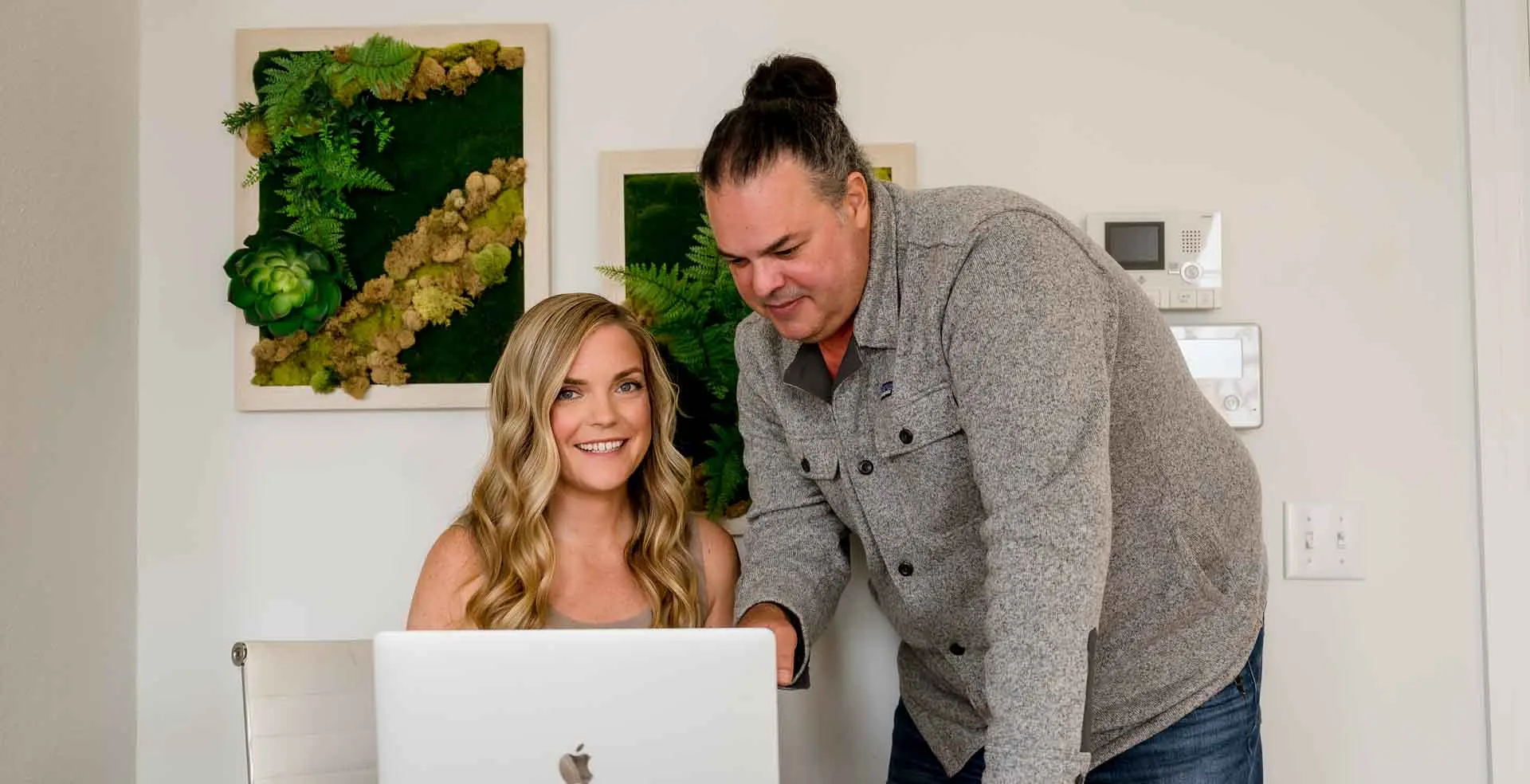 Robert & Liz, RebelFish Local CoFounders
If you want help building a local SEO strategy that actually makes sense for your business, RebelFish Local helps small businesses simplify local SEO, improve visibility, and turn searches into real customers. Download our free resource for 5 Hacks That Will Get You On Page 1 Of Google today, and start climbing to the top of Google!